
Clinical, Scalable, Human: How MUTU System Is Changing Women’s Health
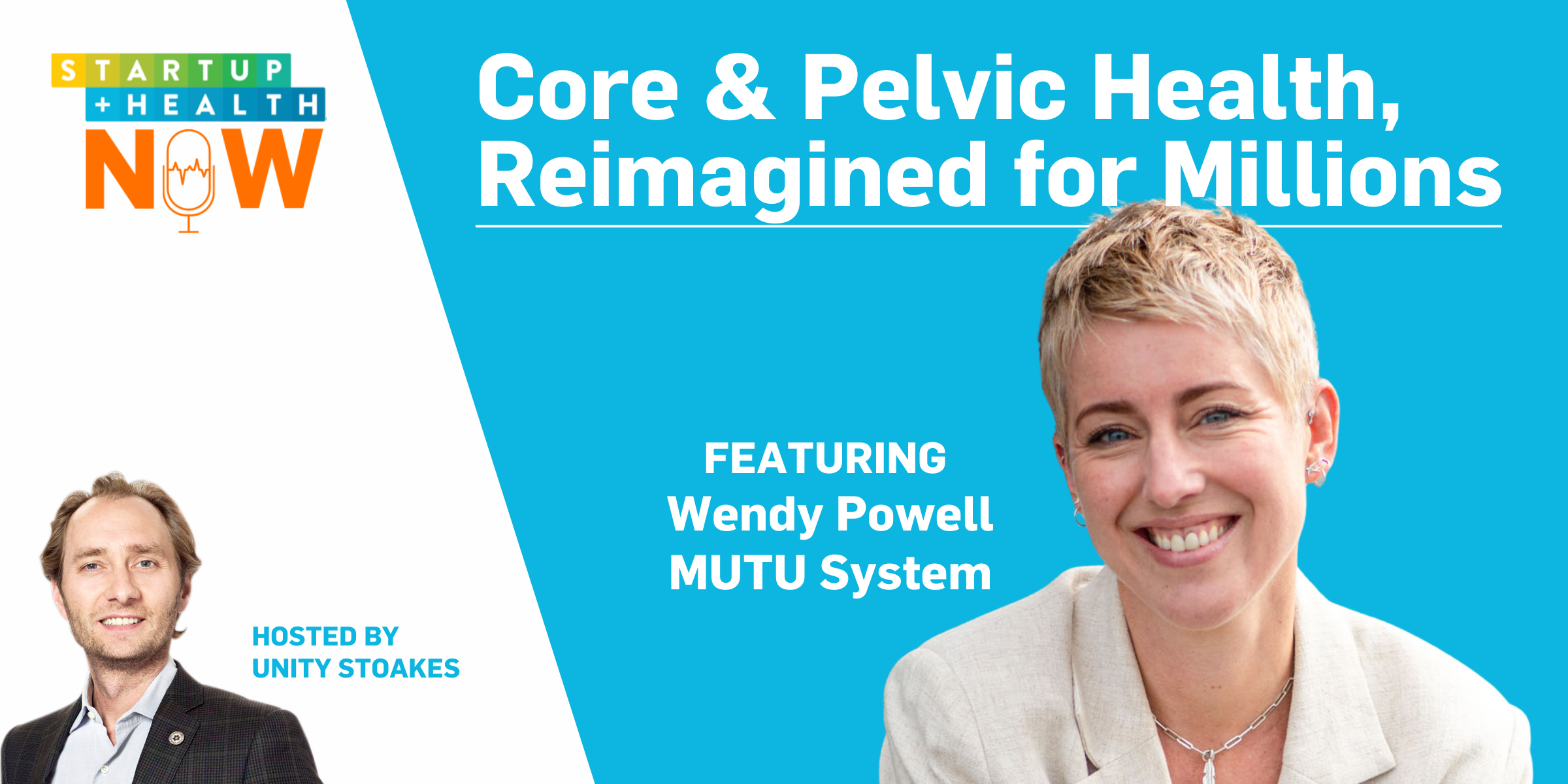
StartUp Health community member Wendy Powell, CEO & Founder of MUTU System, has built a clinically-validated digital platform for core and pelvic health that is reshaping care pathways across the NHS, workplaces, and households worldwide. Now she is focused on reaching millions more women through strategic partners and distributors.

The Challenge: A Massive, Silent Epidemic
Pelvic floor and core problems are some of the most common, least discussed health issues women face.
One in three women live with incontinence. Half of all women who have had a baby will experience prolapse symptoms at some point in their lives. These symptoms show up as bladder leaks, pelvic pain, lower back pain, and diastasis recti. They affect confidence, mental wellbeing, intimate relationships, and the ability to show up fully at work, at home, and in the community.
Because these issues are so widespread, they are often dismissed as “just what happens” after childbirth, with age, or during perimenopause and menopause. Women are told to manage, not mend. They quietly avoid exercise classes, social events, and even professional opportunities because they are anxious about pain, discomfort, or leaking.
MUTU System exists to change that equation. The goal is simple and ambitious at the same time: stop normalizing these symptoms as inevitable, and give women a safe, evidence-based path to fix them.
The Solution: A Clinically-Validated Digital Platform for Core and Pelvic Health
MUTU System is a clinically validated digital health platform that improves pelvic floor function, core strength, and full-body movement for women across pregnancy, postpartum, perimenopause, and beyond. Accessible through a browser on any device, MUTU brings together guided, evidence-based exercise, an expert-moderated community, and coaching and education that is practical, empathetic, and medically aligned.
What started as founder Wendy Powell’s response to her own postpartum recovery journey has grown into a global platform used by more than 100,000 women worldwide. MUTU is offered direct to consumer, within health systems like the NHS in England, and as a benefit through employers and employee assistance programs.
For women, the experience is straightforward. MUTU gives them simple, guided sessions and ongoing coaching that help address symptoms such as bladder leaks, prolapse, and back pain. The program is designed to fit into real life and to support women in feeling strong, confident, and comfortable in everyday activities.
Proof That It Works: Clinical Outcomes and Economic Impact
From the beginning, Wendy knew MUTU needed to be more than a general “wellness program.” She built the product in close collaboration with women’s health physiotherapists and medical professionals who reviewed the exercises, tested the concepts, and asked the hard questions about safety and efficacy. Over more than a decade, that work has evolved into a robust clinical and real world evidence base.
Independent evaluations within NHS pathways, including Unity Insights, Norfolk & Norwich, and Kent & Medway, have shown that 94% of users report improved core strength, 85% report improved pelvic symptoms, and 91% report improved quality of life. These outcomes are grounded in real world use, not just small controlled trials.
An NHS funded economic evaluation added another dimension. At an annual cost of £50 per user, MUTU delivers an estimated £388k net economic benefit over five years when quality of life gains are included. That translates into a £1.50 return for every £1 invested, making a strong case that pelvic health support is not only clinically important but also economically smart.
This combination of clinical validation, real world outcomes, and economic impact is at the heart of MUTU’s positioning as structured rehab and digital therapeutic support, rather than a generic fitness or wellness app.
Human Where It Matters: The MUTU Mamas Community
In a world where anyone can ask a chatbot “What is diastasis recti?” or “Why do I leak when I sneeze?” basic information is easy to find. What is not easy comes after that first search.
Women want to know what recovery should feel like in their own body, how to get back on track after life interrupts a program, and whether a specific sensation is “normal” or a sign they need more help. They need reassurance, nuance, and a place to talk about the emotional side of recovery, not just technical instructions.
That is where MUTU’s community comes in. Inside the membership platform, the MUTU Mamas community gives women a private, moderated space where they can ask questions, share their stories, and celebrate progress. Members can interact directly with Wendy and the MUTU team, who are in the community nearly every day answering questions and offering guidance.
This hybrid of technology and human connection solves one of the toughest problems in digital health: engagement and adherence. Women do not just sign up. They stay, participate, and complete the program at higher rates because they feel seen, supported, and guided by both experts and peers. When someone gets stuck, feels discouraged, or falls off the routine, the community becomes the bridge back in rather than a reason to give up.
Why Employers and Health Systems Are Paying Attention
MUTU System now reaches women through three primary channels. The first is direct to consumer, where women purchase monthly or annual subscriptions and begin using the platform at home. The second is through health systems such as the NHS in England, where general practitioners and other clinicians can prescribe MUTU so women receive it free at the point of care. The third is through employers and benefit platforms, where MUTU is made available as part of employee wellbeing and support.
For employers, the business case is compelling. Pelvic health symptoms directly affect comfort, productivity, and engagement at work. A woman who is worried about bladder leaks may avoid walking across the office, traveling, or joining team activities. A woman who cannot easily step away from a cash register, a factory line, or a hospital ward may drink less water than she should, feel unwell, and struggle to focus. Across a workforce, those hidden adjustments add up to real impacts on performance and retention.
Yet these are not issues employees typically raise with a manager. MUTU gives employers a low-lift way to offer clinically grounded help for a problem that is both common and largely invisible. The program sits comfortably alongside broader benefits such as fertility support, menopause programs, and mental health tools. The difference is that MUTU is focused on addressing root causes and symptom improvement rather than simply adding another layer of coping strategies.
For health systems, MUTU addresses an earlier and more common point of need in the care pathway. Most women using MUTU present with mild to moderate pelvic and core symptoms that do not require acute medical intervention, yet still significantly affect daily life. MUTU is designed as a primary, evidence based solution for these women, delivering clinically validated symptom improvement as a standalone intervention. In more complex cases, it can also complement medical care, but for the majority of users, MUTU provides accessible, structured support that prevents escalation and improves outcomes at scale.
Built for Equity, Inclusion, and Real Life
Equity is not an add-on for MUTU System. It is central to how the platform has been designed and deployed.
The team has been intentional about representing different body types, ethnicities, ages, and life stages throughout the program. This matters not only for visibility and comfort, but also for trust. When women see themselves reflected in the content, it sends an important signal that the program is truly for them, not just for a narrow segment of the population.
MUTU is also part of a broader push to address well documented inequities in maternal and women’s health outcomes. Data show that Black and brown women are more likely to experience complications during childbirth and more likely to have conditions go undiagnosed or untreated. Through work with NHS England, commissioners, and Women’s Health Hubs, MUTU is contributing to new, equity focused pathways that improve access to evidence based pelvic health support.
Accessibility shows up in practical ways as well. Women can engage from any device, at home or at work, and sessions are designed to be realistic in length and intensity. For those who cannot afford even a modest subscription, health system contracts and employer partnerships offer additional routes to free or subsidized access.
All of this is grounded in clear positioning. MUTU is not a generic fitness app. It is a clinically validated program focused on pelvic floor, core strength, functional movement, and measurable symptom improvement. Clinical governance is supported by board certified OB GYNs, GPs, pelvic health physiotherapists, and medical advisors who help shape content and ensure standards of care.
What’s Next: Scaling Through Strategic Distribution
MUTU System has spent more than a decade building, validating, and refining its product with real users and real clinical partners. Today the platform is interoperable, low lift to implement, and proven at scale. The next phase is all about reach.
In the near term, MUTU is launching a partnership with United Health and Optum Now for North American distribution, creating a significant new channel to reach employers and payers. In parallel, the company is focused on expanding NHS utilisation across England over the next six to twelve months, deepening its role within existing pathways and extending to more regions.
Employer offerings in both the United States and the United Kingdom will continue to grow, with more benefit platforms and corporate partners bringing MUTU into their wellbeing portfolios. At the same time, Wendy and her team are exploring bundled partnerships with complementary digital health platforms, including those focused on areas like nutrition, menopause, or mental health. The vision is to make it easy for large employers and payers to adopt a suite of solutions that work well together, with MUTU as the dedicated core and pelvic health component.
On the product side, MUTU is investing in enhanced triage and more personalized pathways. The goal is to use automation to better understand each woman’s symptoms, life stage, and context at the start, then route her into the most relevant journey while preserving the human coaching and community support that make the program so engaging. Technology will help scale personalisation; people will continue to provide empathy, nuance, and accountability.
A Call to Action for Employers, Payers, and Partners
For leaders responsible for workforce wellbeing, MUTU’s message is direct. Your female workforce is silently struggling with symptoms that affect comfort, productivity, and long-term health. These issues are common, they are not inevitable, and they are often fixable with the right structured rehabilitation. MUTU offers a clinically validated, easy to implement solution that can sit inside your existing benefits stack and begin making a measurable difference.
For partners and investors, the opportunity is to help take something that already works to a much larger population. MUTU System is clinically validated, independently evaluated, and proven at scale in real world use. The product is built, the outcomes are strong, and demand from women, employers, and health systems is growing. What is needed now is greater distribution and integration into more pathways and platforms.
StartUp Health is proud to support Wendy Powell and MUTU System as part of our Women’s Health Moonshot, and to help connect them with the employers, payers, and innovators who share their vision. Together, they are working toward a future where core and pelvic health is not a silent burden, but a standard, supported part of women’s health at every life stage.
Watch on StartUp Health TV
Listen on StartUp Health NOW
Join StartUp Health
An exclusive global community for the bold decision makers, thought leaders, funders, and innovators transforming the future of health
Network Plans for Everyone in the Ecosystem: If you're a decision maker, thought leader, funder, or industry stakeholder – this is where the global health ecosystem comes together to learn from experts, share insights, build relationships, explore partnerships, and shape what’s next in health. Join today, no application necessary.
Health Moonshot Plans for Startups & Scaleups: If you're a founder or CEO building a digital health, biotech, or life sciences company, our Health Moonshot Communities are designed for collaboration, coaching, and strategic growth at every stage. Our communities include: Alzheimer’s & Brain Health, Cardiometabolic & T1D, Food as Medicine, Mental & Behavorial Health, and more. If you’re mission-driven, collaborative, and ready to contribute as much as you gain, you might be the perfect fit. Learn more and apply today.
Follow us on LinkedIn for daily updates on Health Moonshots.
Published: Jan 13, 2026
By Nicole Kinsey